Brian French’s opinion and satire. Not investment advice, which already puts it ahead of the Lightning Round.
Quick Answer: Jim Cramer has hosted Mad Money since 2005, dispensing instant stock verdicts to callers he has known for nine seconds. Two decades of mostly rising markets have made the act look smarter than it is. The show is entertainment. Treating it as a financial plan is the actual risk.
The Longest-Running Condition in Financial Media
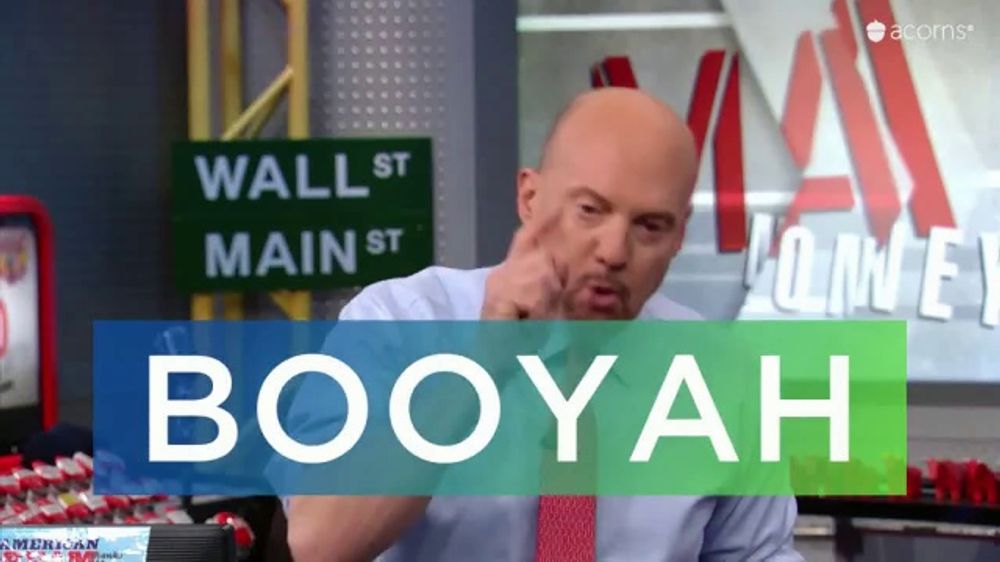
Medicine has made remarkable strides since 2005. Television has not. Mad Money is now old enough to drink, and its host is still sprinting around a set, sleeves rolled, hammering a soundboard like a toddler who found the horn on a fire truck.
We have mapped genomes. We have put AI in refrigerators. We still have no treatment for a grown man yelling “Booyah” at a caller named Gary from Tampa.
Seat-of-the-Pants Advice, Delivered at 110 Decibels
The Lightning Round is the purest expression of the Cramer method. A stranger names a ticker. Within seconds, with no knowledge of the caller’s age, income, tax situation, debts, time horizon, or whether this is the rent money, a verdict arrives: buy, sell, or a buzzer noise.
In any other corner of finance, recommending securities without knowing a thing about the client is called a suitability problem. On cable, it is called a segment.
Real analysis takes hours. Cramer’s takes less time than microwaving a burrito, and the burrito comes with clearer disclosures.
“Am I Diversified?” Yes, Apparently Everyone Is
Then there is the beloved bit where a caller lists five stocks and Cramer rules on whether they are diversified. One tech, one bank, one oil, one drug maker, one retailer? Congratulations, you are blessed.
Five stocks is not a diversified portfolio. It is a parlay. Decades of portfolio research suggest you need dozens of holdings across sizes, geographies, and asset classes before single-company risk meaningfully fades, which is why index funds exist. “Five different industries” is diversification the way five different fast food chains is a balanced diet.
The Bull Market Is the Real Star of the Show
Here is the uncomfortable math. Since Mad Money launched, the S&P 500 has spent most of its time going up. In that environment, a man recommending large, well-known American companies every night will look right a lot. So would a dartboard. So would your uncle.
The persona has been bailed out by the tape, over and over. When the tape turned, the results were memorable. His reassurance to a viewer about Bear Stearns, days before the firm collapsed in March 2008, remains the most replayed clip of his career. Jon Stewart’s 2009 dismantling of him on The Daily Show is still taught, informally, as a masterclass in asking a TV pundit what exactly he is for.
The record got its own punchline in 2023, when an ETF launched with the explicit strategy of doing the opposite of whatever Cramer said. It closed within a year, not because he was vindicated, but because even betting against him could not be turned into a coherent strategy. And a widely cited Wharton analysis found his Action Alerts PLUS charitable trust portfolio trailed the S&P 500 over its long run. A plain index fund, which never screams, won.
Shameless, Thy Name Is Subscription
Every episode doubles as an infomercial. There are the books. There is the paid investing club, plugged with the subtlety of a car dealership on Presidents’ Day. The free advice on TV is the sample tray at the grocery store. The real product is the upsell.
Nothing illegal about it. It is simply worth noticing that the man telling you what to buy is also, always, selling something.
The Voice. The Buttons. The Conduct.
And then there is the delivery. The voice operates in a register somewhere between a smoke alarm and a seagull defending a french fry. The props have included bulls, bears, and sound effects of things being flushed. Chairs have been thrown.
Imagine your actual financial advisor behaving this way. You would not rebalance. You would call security.
In Fairness (We Promise It’s Brief)
Cramer is genuinely smart, ran a successful hedge fund in the 1990s, and co-founded TheStreet. He often tells viewers to do their homework and has said index funds suit most people. He has apologized publicly for some bad calls, which is rarer in punditry than it should be. His defenders argue he got ordinary people interested in markets, and that is not nothing.
The problem is the format, not the IQ. Stock picking at the speed of a game show teaches viewers the exact behaviors that hurt retail investors most: overtrading, overconfidence, and concentration.
The Prescription
After 21 years, the diagnosis is chronic. The only known treatment is the remote control, paired with a boring, low-cost, broadly diversified portfolio that never once raises its voice.
Somewhere out there is a calm, credentialed host willing to say “it depends on your situation.” God help us, give us that person. Booyah.
Sources and Further Reading
- CNBC, Mad Money program history and Lightning Round / “Am I Diversified?” segment archives
- The Daily Show with Jon Stewart, Jim Cramer interview, March 12, 2009
- Hartley and Olson, “Jim Cramer’s Mad Money Charitable Trust Performance and Factor Attribution,” Wharton School
- Tuttle Capital Management announcements on the launch (2023) and closure (2024) of the Inverse Cramer Tracker ETF (SJIM)
- Contemporary coverage of the March 2008 Bear Stearns viewer-question segment and Cramer’s later explanation of it
- Statman, “How Many Stocks Make a Diversified Portfolio?” Journal of Financial and Quantitative Analysis
One note: I kept every factual claim to things on the public record and left out invented quotes, since satire about a real person holds up best when the facts underneath are solid. I did not add URLs to the sources because I wrote this from knowledge rather than a live search, so verify and link them before publishing.