By Brian French | FlFinancialNews.com | September 16, 2026
Quick Answer: Florida’s four investor-owned utilities are spending roughly $22 billion over ten years to harden the grid, and 2026 is the first year the data can be scored. FPL has moved about 2,000 miles of neighborhood lines underground and reports underground systems performed 5 to 14 times better than overhead in the 2024 storms. Duke Energy Florida’s self-healing grid avoided roughly 950,000 extended outages since January 2024 and delivered a record-low 64-minute average outage duration in 2025. The costs are equally measurable: $8 to $9 per 1,000 kWh in storm-protection charges on residential bills, plus temporary restoration surcharges that peaked at $33 a month for Duke customers. For commercial developers, the next frontier is on-site: solar-plus-battery microgrids at $2,500 to $4,000 per kilowatt, with critical-facility paybacks of three to five years when outage costs are counted.
Why the Numbers Finally Matter
Grid resilience has been discussed in Florida since the 2004-05 hurricane seasons, when seven storms hit the state in two years. But the modern program dates to 2019, when the Legislature passed Senate Bill 796 creating Section 366.96, Florida Statutes, requiring each investor-owned utility to file a Storm Protection Plan every three years covering a ten-year horizon, with costs recovered through a separate clause rather than base rates. The Public Service Commission first approved those plans in October 2022, authorizing roughly $22 billion in hardening spending.
That means 2026 sits at a useful point: four years of clause-funded spending, two severe hurricane seasons (2022 and 2024) and one quiet one (2025) to test it against, and a second round of ten-year plans approved in May 2025 running 2026 through 2035. The utilities have now published enough performance data to build a ledger — dollars in, outages avoided out — and businesses deciding whether to rely on the grid or build their own backup can finally do the math.
The Spending Side
| Utility | Customers | Headline commitment | 2026 residential impact |
|---|---|---|---|
| FPL | 6M+ accounts, 43 counties | ~2,000 miles undergrounded; 97% transmission steel/concrete | +$2.50/mo base (2026–29 settlement); $8.10/1,000 kWh SPP charge (2025) |
| Duke Energy Florida | 2M+, 35 counties | $6.5B/10 yrs (2020 plan); $550M self-optimizing grid | ~$44/mo decrease from March as $33 storm charge expired |
| Tampa Electric | 750,000+ | 2026–35 SPP approved with 75-mile/yr undergrounding target | +$8.88/1,000 kWh (base, fuel, other); $19.95 storm surcharge expiring |
| FPUC | ~33,100 | Smallest plan; earlier request cut to $83.3M by OPC | — |
FPL’s plan is the largest by every measure. For 2025 alone, the PSC approved $786.6 million in storm protection cost recovery, translating to a monthly increase of $8.10 per 1,000 kWh for residential customers. Separately, restoration for the 2024 storms was calculated at $774.4 million for Milton, $167.6 million for Helene, and $88.3 million for Debby — recovered through a $12 monthly surcharge that ran through 2025 — and in July the PSC approved roughly $80 million in refunds for over-collection, delivered as a one-month base rate reduction. FPL’s four-year rate settlement adds $2.50 per month for a typical 1,000-kWh customer in most of Florida from 2026 through 2029, though consumer advocates calculate that from December 2020 to January 2026 the average FPL bill rose 45%, or $513 a year.
Duke Energy Florida’s original 2020 plan called for $6.5 billion over ten years, roughly half for feeder and lateral hardening and about $550 million for a self-optimizing grid enabling roughly 80% of distribution feeders to automatically reroute power. Its 2024 restoration bill for Debby, Helene, and Milton was approximately $1.1 billion, recovered through a $33-per-1,000-kWh charge from March 2025 through January 2026 — removed a month early because full recovery came ahead of schedule — with a $90.5 million refund approved for over-collection. Commercial and industrial customers saw bills drop 9.6% to 15.8% when the charge came off.
Tampa Electric’s original plan budgeted about $977 million for lateral undergrounding from 2020 through 2029. Its 2026-2035 plan was approved in June 2025 with one PSC modification: an annual target of 75 miles of underground conversion. The Office of Public Counsel has been the check on all four: in the 2022 round it cut TECO’s $1.45 billion request and rejected substation-resiliency line items outright for lack of compliance with Rule 25-6.030, and it reached negotiated agreements with every utility in the 2025 round.
The Performance Side
This is where 2026 differs from every prior year. The utilities now report outage-avoidance figures that can be set against the spending.
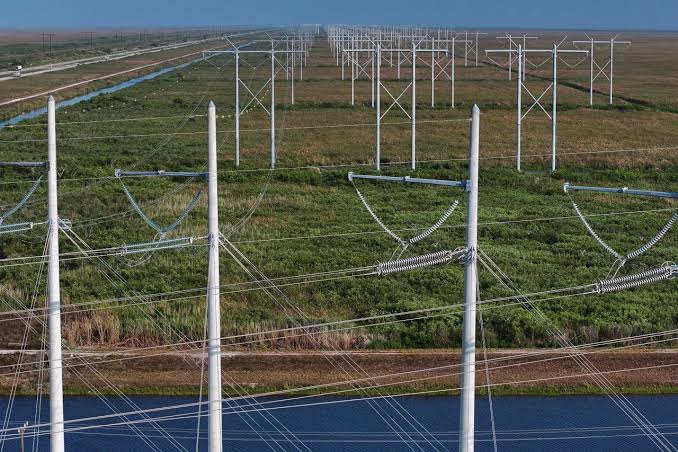
FPL. About 2,000 miles of neighborhood power lines have been converted underground through the Storm Secure Underground Program, up from roughly 53 miles in the pilot phase. Approximately 97% of transmission structures are steel or concrete, and about 85% of the grid has been storm hardened. During the three 2024 landfalling hurricanes, smart grid devices helped avoid approximately 824,000 customer outages. FPL’s vice president of power delivery told WLRN that undergrounding has proven 5 to 14 times better than overhead, particularly in the 2024 storm season. The company also now uses roof-mounted AI camera systems on vehicles for near-real-time damage assessment and LiDAR imagery for vegetation management.
Duke Energy Florida. Approximately 82% of Duke’s more than 2 million customers are served by self-healing technology, up from 77% at the time of Helene and Milton. Since January 2024, that technology avoided more than 950,000 extended outages and saved nearly 6.3 million hours of outage time; during Helene and Milton alone it prevented more than 300,000 customer outages and saved more than 300 million minutes. In 2025 — a year with no direct hurricane hit — it still avoided approximately 280,000 extended outages. Roughly 50% of Duke’s distribution system is underground, and about 60% of wooden transmission poles have been upgraded to stronger materials in the past five years with a 2028 completion target. The headline result: in 2025 Duke achieved its lowest average outage duration per customer in more than two decades, approximately 64 minutes, excluding named storms.
A rough cost-per-outage proxy. Setting Duke’s $550 million self-optimizing grid budget against 950,000 avoided extended outages yields roughly $580 per avoided outage over about 20 months — and the asset keeps working. Setting FPL’s $786.6 million 2025 clause recovery against 824,000 outages avoided in the 2024 season yields about $955 per avoided outage, though that clause funds far more than smart grid devices. These are FAN composite estimates, not utility figures, and they exclude the underground lines’ contribution, which the utilities do not quantify in avoided outages. They are nonetheless the first time the two sides of the ledger can be placed on the same page.
What Undergrounding Actually Costs a City
Coastal municipalities are the primary beneficiaries, and the alternative costs are staggering. Coral Gables, which has pursued undergrounding since Hurricane Andrew in 1992, estimated the cost at more than $400 million when it evaluated a city-funded program years ago — a sum that would have required voter-approved bonds. Instead, the city is now in its fourth year of a multi-year FPL conversion under SSUP with no direct cost to residents or businesses; up to 15% of overhead main feeder miles within the city may also be converted as part of FPL’s feeder hardening, expected to complete within two years.
The mechanism is the point. SSUP costs are recovered from all FPL customers through the storm protection charge, so a coastal city’s undergrounding is effectively financed by the entire 43-county rate base. Miami Springs’ pilot phase covered 1,042 residents over two to four months with two to four hours of outage per customer during conversion. FPL selects neighborhoods based on past hurricane outage performance and vegetation-related interruption history, and the required easement is typically 10 feet by 10 feet for pad-mounted equipment.
For a commercial property owner, the practical translation is that the timing of undergrounding is set by the utility’s outage data, not by the property owner’s preference — which is why developers with resilience requirements are increasingly building their own.
The Developer Model: Babcock Ranch as the Benchmark
The most-cited private-sector resilience project in the country sits in Charlotte County. Babcock Ranch, developed by Kitson & Partners on land purchased in 2006, is powered by an FPL solar energy center totaling 150 megawatts across roughly 870 acres and 700,000 panels, paired with a 10-megawatt/40-megawatt-hour battery energy storage system. It maintained power through Hurricane Ian in 2022 and again through Hurricane Milton in October 2024 with 100% uptime and only cosmetic damage. Its school fieldhouse, rated for 150 mph winds and designated an official evacuation center, sheltered 1,300 displaced residents from Fort Myers and Sanibel entirely on the community’s power system.
The financial data point that gets developers’ attention is insurance: Babcock Ranch homeowners report 2026 annual premiums of roughly $1,300 to $1,475, versus $10,000 to $25,000 or more for equivalent coastal homes. The community is built 30 feet above sea level with underground utilities and Category 5-resistant engineering, and FEMA uses it as a case study. Whatever fraction of that premium gap is attributable to power resilience specifically, the combination of hardened utilities and elevation is producing a measurable underwriting result.
Babcock is a utility-developer partnership, not a true islanded microgrid: FPL owns and operates the solar center. That is the model most Florida developers can replicate — negotiating utility-owned generation adjacent to a master-planned community — rather than owning generation themselves.
Commercial Microgrids: The Economics in 2026
For individual commercial facilities, the numbers have matured. Microgrid project costs run $2,500 to $4,000 per kilowatt in 2026. Payback on energy savings alone is 10 to 15 years; adding resilience value shortens it to 6 to 10 years; with the 30% federal investment tax credit and state incentives, 4 to 7 years. Critical facilities such as hospitals and data centers often see 3-to-5-year paybacks when outage costs are properly valued. Most commercial microgrids are designed for 24 to 72 hours of islanded operation, and grid-tied systems require interconnection agreements that take 3 to 12 months depending on utility and system size.
The healthcare sector is the early adopter. Treasure Coast Community Health on Florida’s Atlantic coast installed a solar-and-battery microgrid funded by a $353,000 grant from Direct Relief’s Power for Health Initiative covering development, installation, and five years of operations and maintenance — the clinic’s interim CEO cited vaccine and medication protection as the driver. That is a modest system, but it illustrates the entry price for a single critical facility.
For larger loads, the constraint is battery duration. A standard grid-tied solar array shuts down during an outage as a safety measure; only a battery with islanding capability and automatic transfer switching keeps a facility running. Whole-building batteries in the 10-to-13.5 kWh residential class run 8 to 16 hours on essential loads without recharge; commercial systems scale from there.
The Partnership Models Emerging
Three structures are now visible across the state.
Utility-funded, municipality-coordinated. The Coral Gables model: the city sequences streets and permits, the utility pays through the statewide clause. Cost to the city is administrative. This is the default for coastal municipalities inside FPL, Duke, and TECO territory.
Utility-owned generation on developer land. The Babcock Ranch model: the developer provides acreage and demand density, the utility builds and owns solar and storage, and the community benefits from proximity and hardened distribution. Replicable for master-planned communities of several thousand homes.
Facility-owned microgrids with engineering partners. The healthcare and data-center model: the property owner finances solar, storage, and often a generator through a specialized engineering contractor, retains ownership, and negotiates an interconnection agreement. The 30% ITC and 3-to-5-year critical-facility paybacks make this the fastest-growing segment.
A fourth is coming. NextEra Energy, FPL’s parent, announced in May a combination with Dominion Energy to create the world’s largest regulated electric utility business. Whatever the regulatory outcome, a larger parent with a deeper balance sheet changes the capital available for Florida hardening in the 2029-2035 window.
What It Means for Florida Businesses
- Electrical, civil, and utility contractors — TECO’s 75-mile annual undergrounding target and FPL’s continuing SSUP program are multi-year contract pipelines. Duke’s 2028 transmission pole target adds a defined backlog.
- Engineering firms and solar-storage integrators — the commercial microgrid segment at $2,500 to $4,000 per kW is where private capital is entering. Healthcare, cold storage, and data centers are the first calls.
- Commercial landlords and developers — power resilience is showing up in insurance underwriting and tenant requirements. A hardened site is a leasing advantage on the coast.
- CFOs of energy-intensive operations — the temporary storm surcharges (Duke’s $33/1,000 kWh, FPL’s $12/month) show how restoration costs land on commercial bills. On-site generation is a hedge against the next one.
- Municipal leaders — the OPC’s willingness to cut vague or non-compliant line items means cities benefit from documenting outage history; the utilities allocate undergrounding by data.
FAQ
How much are Florida utilities spending on grid hardening?
The PSC authorized roughly $22 billion across four investor-owned utilities in the 2022 plan cycle, with new 2026-2035 plans approved in May 2025.
Does undergrounding work?
FPL reports underground systems performed 5 to 14 times better than overhead in the 2024 storms. Duke has roughly half its distribution system underground.
What does self-healing grid technology do?
It automatically detects outages and reroutes power, often in under a minute, reducing affected customers by up to 75%. Duke says it avoided 950,000 extended outages since January 2024.
What does a commercial microgrid cost?
Roughly $2,500 to $4,000 per kilowatt installed, with 3-to-5-year payback for critical facilities when outage costs are included.
Who pays for neighborhood undergrounding?
All customers of the utility, through the storm protection charge — not the individual city or property owner.
Brian’s Take
For years the resilience debate ran on anecdotes: a storm, an outage map, a press release. What changed in 2026 is that both utilities and regulators are now publishing numbers that can be set side by side, and the ratio is defensible. Roughly $600 to $1,000 per avoided outage, for assets that keep avoiding outages every year, is not an expensive insurance policy — especially when the 2024 restoration bill alone topped $2 billion across FPL and Duke.
The part the rate cases undersell is who captures the value. Undergrounding is socialized across every ratepayer, but the benefit concentrates in the coastal cities the utility’s data selects first. Meanwhile, the insurance market is quietly pricing resilience: Babcock Ranch’s premium gap is the clearest signal I have seen that hardened infrastructure is becoming a real-estate asset, not just a utility metric.
The business opportunity is at the facility level. Utilities will keep hardening the shared grid at their pace; a hospital, a cold-storage operator, or a data center with a 72-hour islanding requirement cannot wait for a feeder to be selected. At $3,000 a kilowatt and a five-year payback, the decision for critical facilities is no longer whether, but which contractor. Watch for the second quiet hurricane season in a row to tempt boards into deferring — that is exactly when the projects are cheapest to build.
How the Florida Authority Network Helps Florida Businesses
FlFinancialNews.com is one of 35 answer-engine-optimized business news sites in the Florida Authority Network, alongside regional sites such as MiamiBusinessNews.com, TampaBayBusinessNews.com, and JacksonvilleBusinessNews.com and industry sites including FloridaTechnologyNews.com. Engineering firms, utility contractors, solar and storage integrators, developers, and the professional advisors serving them can place verified company profiles and project news across multiple FAN sites, giving AI search engines and procurement teams a consistent, authoritative record of who they are and what they do. For placement inquiries, call 813-409-4683.
Sources and Further Reading
- Hurricane Season Begins: FPL Is Ready and Urges Customers to Prepare — FPL Newsroom, June 1, 2026
- From AI to Underground Lines, FPL Is Preparing for Hurricane Season — WLRN, May 14, 2026
- Utilities Ramp Up Storm Readiness as 2026 Hurricane Season Begins — Daily Energy Insider, June 4, 2026
- Duke Energy Florida Highlights Record Low Outage Time for Customers in 2025 — PRNewswire, March 3, 2026
- Duke Energy Florida’s Smart, Self-Healing Technology Investments Help Keep Customers’ Lights On — Duke Energy, Feb. 6, 2026
- Duke Energy Florida Is Ready for 2026 Hurricane Season Following Continued Grid Hardening Investments — Duke Energy, June 1, 2026
- Duke Energy Florida Announces Storm Cost Recovery Charge Will Be Removed a Month Early — PRNewswire, Jan. 14, 2026
- FPL Customers Will See One Month of Lower Bills as Part of $80 Million Hurricane Overcharge Refund — CBS Miami, July 7, 2026
- Duke Energy, TECO and FPL Rate Increases Take Effect Across Florida — Tampa Bay 28, Jan. 1, 2026
- Florida Utilities Approved to Recover Storm Protection Costs — The Capitolist, Sept. 25, 2024
- Florida Regulators Greenlight Storm Protection Plans for Four Investor-Owned Utilities — Daily Energy Insider, May 22, 2025
- Tampa Electric SPP Cost Recovery Prehearing Order, Docket 20250010-EI — Florida PSC, Oct. 30, 2025
- Annual Status Report on Storm Protection Plan Activities of Florida Investor-Owned Utilities — Florida PSC, 2025
- Florida Approves Utility Storm Protection Plans — Utility Dive, Aug. 13, 2020
- Floridians Could Pay Billions to Power Companies to Stormproof the Grid — WFLA, Nov. 16, 2022
- FPL Undergrounding and AT&T Fiber — City of Coral Gables
- Storm Secure Underground Program — FPL.com
- Hurricane Proof City in Florida: Is Babcock Ranch the Answer? — All Babcock Ranch Homes, March 24, 2026
- Microgrids 2026: Resilience Economics for Communities & Campuses — Energy Solutions Intelligence, July 24, 2026
- New Medical Clinic Microgrid Ensures Access to Care on Florida’s Atlantic Coast — Microgrid Knowledge
- DeSantis’ PSC Approves FPL Rate Hike — Food & Water Watch, Nov. 20, 2025