Commentary — Florida Authority Network
Quick Answer: On financial television, camera appeal is part of the job description for every on-air guest, and networks book accordingly. The result is a lineup dominated by polished commentators in their late twenties and thirties, most of whom started their careers after the 2008 crisis, while the 60-and-over professionals who managed money through the dot-com bust, 2008 and 2020 rarely get airtime. In a rising market, confident and accurate look identical. Investors, especially Florida retirees managing their own money, should weigh a commentator’s crisis experience before weighing their forecast.
Decoration Is Part of the Job
Let’s be honest about what financial television is. It is television. Every person who appears on it, anchor or guest, has been screened for how they come across on camera before anyone checked how they came across in a bear market. That is not a scandal. It is the business model.
But it has a cost, and the cost is sitting at home.
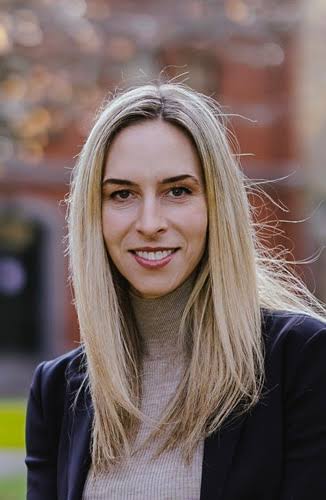
Turn on any business network and read the titles under the guests: Senior Analyst, Chief Economist, Director of Investment Strategy, Head of Global Allocation. Then look at the faces. What you will mostly see is a cast of recent graduates — prom-queen polished, well-lit, well-spoken, and delivering opinions on global capital markets with the serene confidence of people who have never had a margin call.
I am sure many of these sharpies have a good education. Some have excellent ones. But a diploma is not a scar, and the market has never cared where anyone went to school. The question is not “how smart is this person?” It is “what has this person lived through with real money on the line?”
For most of today’s on-air lineup, the honest answer is: not much. And the people who could answer differently are not being asked.
The Missing Demographic
Ask yourself when you last saw a 62-year-old portfolio manager on a midday market segment. Someone who ran money through 2000, sat through 2008, and bought the bottom in March 2020 while the graduates were in graduate school. That person exists. There are thousands of them, many retired to Florida. They are almost never on your screen.
They are not booked because they do not fit the frame. They are gray, they are slower to answer, they hedge, and they say “it depends” — which is what every real veteran believes and what no producer wants in a four-minute segment. Television optimizes for what the camera can see. It cannot see judgment, so it does not book for it.
The Math of Missing a Crisis
Market wisdom is not distributed evenly across a career. It arrives in bursts, and the bursts are called crises.
| Market event | Year | Age today if working then (at 25) |
|---|---|---|
| Dot-com collapse | 2000–2002 | 49–51 |
| Global financial crisis | 2008–2009 | 42–43 |
| Flash crash / Euro debt scare | 2010–2011 | 40–41 |
| COVID crash | March 2020 | 31 |
| Rate-shock bear market | 2022 | 29 |
A 32-year-old strategist on television today was in high school when Lehman Brothers failed. A 38-year-old was in college. To have professionally managed money through 2008, a commentator needs to be about 42 or older. Through the dot-com bust, about 50. To have worked through all three modern crises, you are looking at the 60-and-up crowd — the exact group the camera has retired.
The 2020 crash counts, but only partly. It lasted about five weeks and was followed by the fastest recovery in modern history. It taught a generation that dips get bought and the Fed arrives quickly. That is a lesson, and a dangerous one to carry alone.
Why Networks Book Polish Over Scars
Airtime rewards clarity, not caution. A confident view and a memorable phrase fit the segment. “It depends” does not.
Younger guests are cheaper and available. A firm’s senior partners bill their hours to clients. The junior strategist with a “Director” title is the one the communications department can spare at 9:40 a.m.
Title inflation is free. “Vice President” is a mid-level job at most institutions. “Director of Investment Strategy” can describe a two-person team. A grand title costs nothing and buys credibility on a chyron.
Camera appeal is screenable. Judgment is not. Producers can see on a test call whether someone is telegenic. They cannot see whether that person held their process through a 40% drawdown. So they hire for what they can see.
In a Bull Market, Everything and Everyone Looks Good
The deeper problem is not the age of the commentators. It is the market that has been grading them.
With brief interruptions, U.S. equities have trended higher for most of the past 17 years. Anyone who started in that window has been rewarded daily for optimism. Their forecasts have mostly been right, their clients mostly happy, their confidence reinforced by the tape every afternoon.
That is exactly how a bull market works on people. It does not make the confident look reckless. It makes the reckless look confident. The difference shows up only afterward, and by then the viewer who followed the advice has already paid the tuition.
A veteran who lived through 2000 and 2008 carries something no bio lists: the memory of being wrong for months at a time, of watching “can’t-miss” positions go to zero, of clients calling at 6 a.m. That memory produces humility, and humility produces the words every good advisor eventually learns: “I don’t know, so here is how we’re positioned if I’m wrong.” You rarely hear that on television. It does not make a good clip.
What This Means for Florida Investors
Florida has one of the largest populations of self-directed retirees in the country, many of whom watch business television daily and act on it. The irony is sharp: the viewers have more market experience than the guests. For that audience, the gap between on-air polish and real experience is a portfolio risk, not a media complaint.
Five filters worth applying:
- Check the start year. Most firm bios list one. After 2009 means the person has never professionally navigated a prolonged bear market.
- Discount the title. Judge the argument, not the chyron.
- Listen for conditionals. Experienced investors speak in probabilities and scenarios. Inexperienced ones speak in certainties.
- Watch who gets booked when markets fall. In real stress, networks suddenly find the gray hairs. That casting change tells you what producers themselves believe about experience.
- Remember the segment’s purpose. The guest is there to represent a firm and fill a slot. Neither goal is protecting your retirement.
The Bottom Line
The people on financial television are, by and large, intelligent, educated and articulate. Those are real qualifications for talking about markets. They are not qualifications for having been tested by markets, and the two get confused every trading day — by producers, by viewers, and often by the commentators themselves.
The next serious downturn will sort the graduates from the professionals in a hurry, and the networks will scramble to book the people they have ignored for a decade. Until then, weight every on-air forecast by the age of the forecaster’s scars, not the shine of the delivery.
Sources and Further Reading
- Federal Reserve History — “The Great Recession and Its Aftermath” (federalreservehistory.org)
- Charles P. Kindleberger and Robert Z. Aliber, Manias, Panics, and Crashes: A History of Financial Crises
- Roger Lowenstein, When Genius Failed: The Rise and Fall of Long-Term Capital Management
- Howard Marks, Mastering the Market Cycle: Getting the Odds on Your Side
- Philip E. Tetlock and Dan Gardner, Superforecasting: The Art and Science of Prediction
- S&P Dow Jones Indices — S&P 500 historical returns and drawdown data (spglobal.com)
- CFA Institute — “The Behavioral Biases of Investment Professionals” research series